

Comparing CMS Security, Vulnerabilities, and Website Maintenance
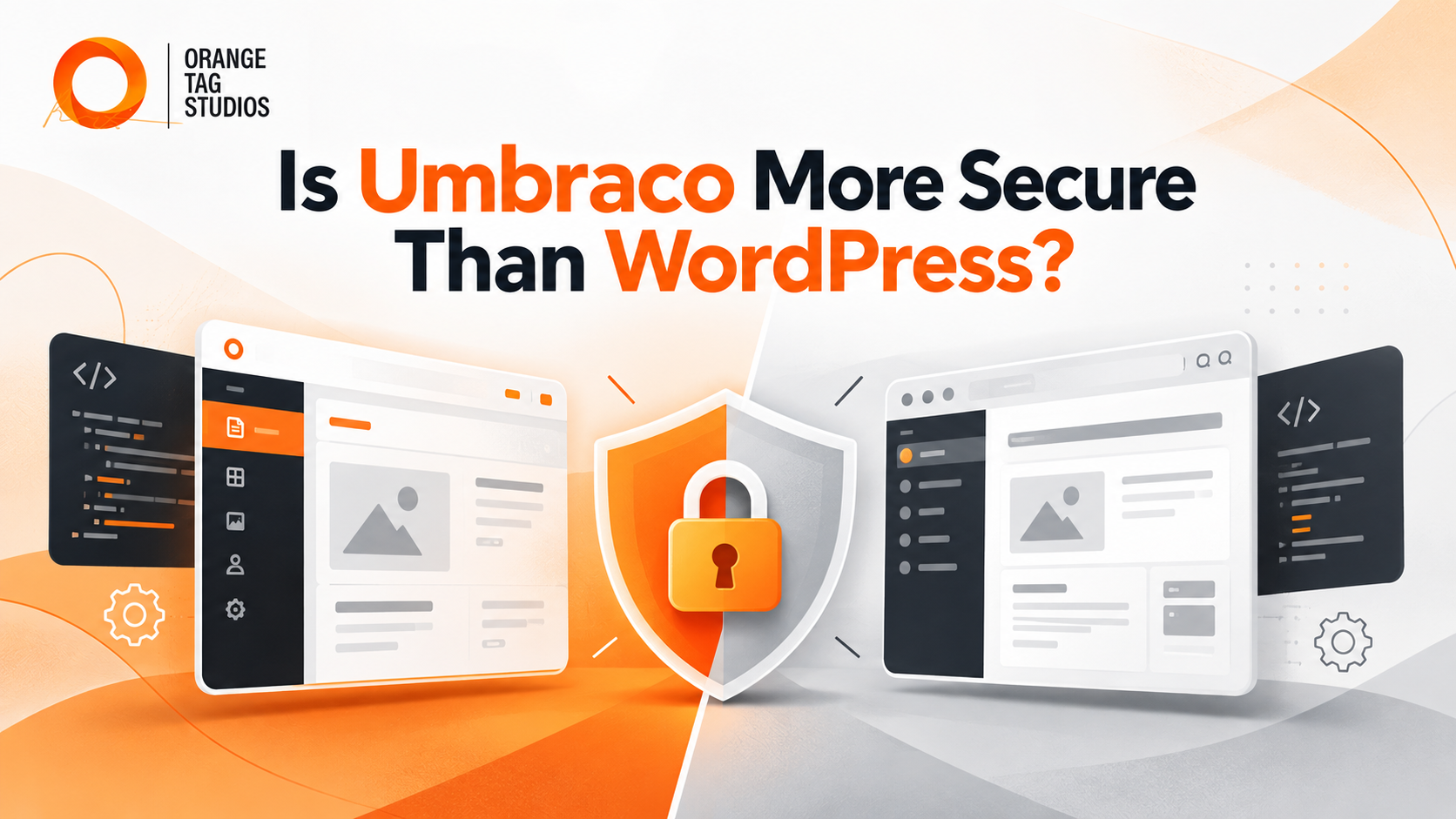
When choosing a content management system (CMS), security is one of the most important considerations. Businesses comparing Umbraco and WordPress often wonder whether one platform offers better protection against hacking, malware, and other cybersecurity threats.
So, is Umbraco more secure than WordPress? The answer depends on how each platform is developed, configured, and maintained. Umbraco can offer certain security advantages because of its smaller extension ecosystem and developer-focused architecture. However, WordPress is not inherently insecure, and a professionally maintained WordPress website can be just as capable of protecting sensitive information.
Understanding the differences between these platforms can help businesses make a more informed decision about which CMS best meets their security and operational needs.
Understanding WordPress Security
WordPress is the world’s most widely used content management system, powering a substantial portion of websites worldwide. Its popularity makes it a frequent target for automated attacks, but that doesn’t necessarily mean WordPress has poor security.
WordPress maintains a dedicated security team and regularly releases updates to address vulnerabilities within its core software. It also has an established process for reporting and resolving security issues affecting its plugins and themes.
The biggest security concern with WordPress is often not the core platform itself, but the additional software installed alongside it. A typical WordPress website may include multiple plugins, a commercial theme, third-party scripts, and custom functionality. Each component introduces additional code that must be properly maintained.
When one of those components contains a vulnerability, the entire website can potentially become exposed, even if WordPress core is fully updated.
The WordPress Plugin Ecosystem Creates a Larger Attack Surface
Plugins are one of WordPress’s greatest advantages. Businesses can add SEO tools, contact forms, ecommerce functionality, custom fields, caching, analytics, memberships, and countless other features without developing everything from scratch.
However, this flexibility introduces additional security considerations. Every plugin adds code to the website, often maintained by a different development team. The more third-party software a website depends on, the more potential vulnerabilities its administrators need to monitor.
The security of a WordPress website isn’t determined solely by WordPress itself. It also depends on the security practices of the developers responsible for its plugins and themes.
This is why experienced WordPress developers recommend choosing reputable extensions, removing unnecessary plugins, avoiding abandoned software, and keeping everything updated. A carefully developed website using a handful of well-maintained plugins may have a significantly smaller attack surface than one relying on dozens of outdated extensions.
How Is Umbraco Different From WordPress?
Umbraco is an open-source CMS built on Microsoft’s .NET framework and modern .NET platform. Unlike WordPress, which uses PHP, Umbraco operates within the Microsoft development ecosystem and is frequently used for custom-built websites and enterprise applications.
One of Umbraco’s distinguishing characteristics is its development approach. While WordPress websites commonly rely on prebuilt themes and plugins, Umbraco implementations often involve more custom development and fewer third-party extensions.
This approach can give developers greater control over the website’s codebase, dependencies, and security configurations. Instead of integrating numerous plugins from unrelated developers, teams may build functionality specifically around the organization’s requirements.
A smaller dependency footprint can reduce the number of third-party components that require security monitoring and updates. However, custom development introduces its own risks, especially when security testing and code reviews are inadequate.
Does Umbraco Have Security Vulnerabilities?
Yes. Like WordPress and every other major CMS, Umbraco has experienced security vulnerabilities requiring patches and software updates.
Umbraco maintains a security advisory process and releases fixes when vulnerabilities are identified. Its security program also includes internal testing and independent assessments designed to identify potential weaknesses.
The important distinction isn’t whether a CMS has ever experienced a vulnerability. Nearly every widely used software platform has. What matters is how vulnerabilities are discovered, communicated, and resolved.
Both WordPress and Umbraco provide security updates, but the responsibility for applying those updates ultimately depends on the website’s hosting environment and maintenance arrangements.
Organizations using managed hosting solutions, such as Umbraco Cloud or managed WordPress hosting, may benefit from automated updates and additional security monitoring. However, the scope of those protections varies between providers.
Is WordPress Easier to Hack Than Umbraco?
Not necessarily. A professionally developed WordPress website with appropriate security controls can be extremely difficult to compromise.
One reason WordPress experiences so many attacks is its popularity. Attackers frequently use automated tools to scan websites for known vulnerabilities affecting commonly installed WordPress plugins, themes, and outdated installations.
Because WordPress powers such a large portion of the internet, identifying a vulnerability in a widely used plugin can potentially provide attackers with access to thousands of vulnerable websites.
Umbraco has a smaller market share, which may make it a less frequent target for broad automated attacks. However, fewer attacks don’t automatically make a platform more secure.
A poorly configured Umbraco website can still be vulnerable to compromised credentials, insecure custom code, outdated dependencies, or server misconfigurations.
A well-maintained WordPress website can be more secure than a poorly maintained Umbraco website, and the reverse is equally true.
Umbraco vs. WordPress Security Comparison
Although both platforms offer strong security capabilities, their ecosystems and typical development approaches create some important differences.
| Security Factor | WordPress | Umbraco |
|---|---|---|
| Core security updates | Regular updates | Regular updates |
| Open-source software | Yes | Yes |
| Development platform | PHP | .NET |
| Third-party ecosystem | Extremely large | Smaller |
| Typical extension usage | Often higher | Often lower |
| Automated attack exposure | Frequently targeted | Less frequently targeted |
| Custom development | Supported | Common |
| Managed hosting options | Widely available | Available |
| Enterprise suitability | Yes | Yes |
| Ongoing maintenance | Required | Required |
The largest difference isn’t necessarily the security built into the core CMS. Instead, it comes down to how each website is developed, which dependencies are introduced, and how effectively those components are maintained.
When Umbraco May Be the More Secure Choice
Umbraco can be particularly appealing to organizations that require a tightly controlled development environment. Companies with dedicated development teams may prefer its .NET architecture because it integrates naturally with existing Microsoft infrastructure and established enterprise development workflows.
Organizations that benefit most from Umbraco often have strict security requirements, complex integrations, custom user permissions, or internal development teams responsible for managing application security.
Umbraco’s smaller extension ecosystem can also encourage developers to take a more deliberate approach to implementing website functionality. Rather than relying on numerous third-party plugins, teams may develop and audit features specifically for their organization.
However, this approach typically requires greater technical expertise and can increase development and maintenance costs compared with WordPress.
When WordPress Can Be Just as Secure
WordPress is a strong option for businesses that need a flexible, scalable CMS without the development overhead often associated with custom enterprise platforms.
A properly maintained WordPress website should include several important security measures:
- Regular WordPress core, theme, and plugin updates
- Reputable plugins with active developer support
- Strong passwords and multifactor authentication
- Limited administrator permissions
- Secure hosting and server configurations
- Web application firewall protection
- Malware monitoring and vulnerability scanning
- Regular website backups and recovery procedures
These security practices substantially reduce the risks associated with operating a WordPress website.
For small and medium-sized businesses, WordPress can provide an effective combination of security, flexibility, and affordability when supported by an experienced development team.
Does Using Fewer WordPress Plugins Improve Security?
Reducing unnecessary plugins can improve website security, but the number of plugins isn’t the only factor that matters.
A website running 15 reputable, regularly updated plugins may be considerably more secure than one running only three plugins if those three contain outdated or vulnerable code.
The more important consideration is plugin quality, ongoing support, and whether each plugin is actually necessary.
Professional WordPress developers should evaluate extensions before installing them, monitor security advisories, and remove functionality that is no longer required. In some cases, custom development can eliminate unnecessary dependencies and simplify ongoing maintenance.
However, custom code must also be properly reviewed, tested, and maintained. Replacing a reliable plugin with poorly written custom functionality does not automatically improve security.
Is Umbraco Better for Enterprise Website Security?
Umbraco can be an attractive CMS for enterprise organizations, particularly those operating within the Microsoft ecosystem.
Its .NET architecture, flexible development capabilities, and ability to support customized workflows make it suitable for organizations with complex technical requirements.
Enterprise development teams can implement security controls, integrate authentication systems, and manage deployments according to their internal policies.
However, WordPress is also used in enterprise environments and can support advanced security configurations, custom integrations, and large-scale publishing operations.
Choosing between Umbraco and WordPress for enterprise use should involve more than comparing their core security capabilities. Organizations should also evaluate developer availability, infrastructure requirements, integration complexity, hosting options, and long-term maintenance costs.
A secure enterprise website requires an effective development and maintenance strategy regardless of the CMS being used.
So, Is Umbraco More Secure Than WordPress?
Umbraco can offer security advantages in certain development environments, but it is not automatically more secure than WordPress.
Its smaller third-party ecosystem and developer-focused architecture can make it easier for experienced teams to maintain a controlled technology stack. WordPress, meanwhile, introduces more opportunities for third-party vulnerabilities because of its extensive plugin and theme ecosystem.
That doesn’t mean WordPress is inherently vulnerable. With secure hosting, carefully selected plugins, appropriate user permissions, and consistent maintenance, WordPress can provide excellent security for businesses of virtually any size.
Similarly, an Umbraco website with outdated software, insecure custom development, or poor server configurations can still be compromised.
Ultimately, website security depends more on how a CMS is implemented and maintained than which platform is selected.
Choosing the Right CMS for Your Business
Security should play an important role in selecting a CMS, but businesses should also consider development costs, ongoing maintenance, ease of content management, SEO capabilities, integrations, and long-term scalability.
Umbraco may be a strong fit for organizations with dedicated .NET development resources and complex enterprise requirements. WordPress is often a practical choice for businesses that value flexibility, ease of content management, and access to an extensive development ecosystem.
Secure WordPress Development With Orange Tag Studios
At Orange Tag Studios, we believe a secure website starts with thoughtful development, not simply choosing a particular CMS.
Our team specializes in WordPress design and development, helping businesses build websites that prioritize performance, usability, scalability, and long-term maintainability. From custom WordPress development to ongoing website improvements, we focus on creating solutions that support your business without introducing unnecessary complexity.
If you’re evaluating CMS options or looking to improve an existing WordPress website, contact Orange Tag Studios to discuss your project.