

Every business needs a steady flow of new customers to grow. Whether you’re a plumber, HVAC contractor, landscaper, or retail business owner, finding people who need your products or services is an important part of keeping your business profitable.
That’s where B2C lead generation comes in.
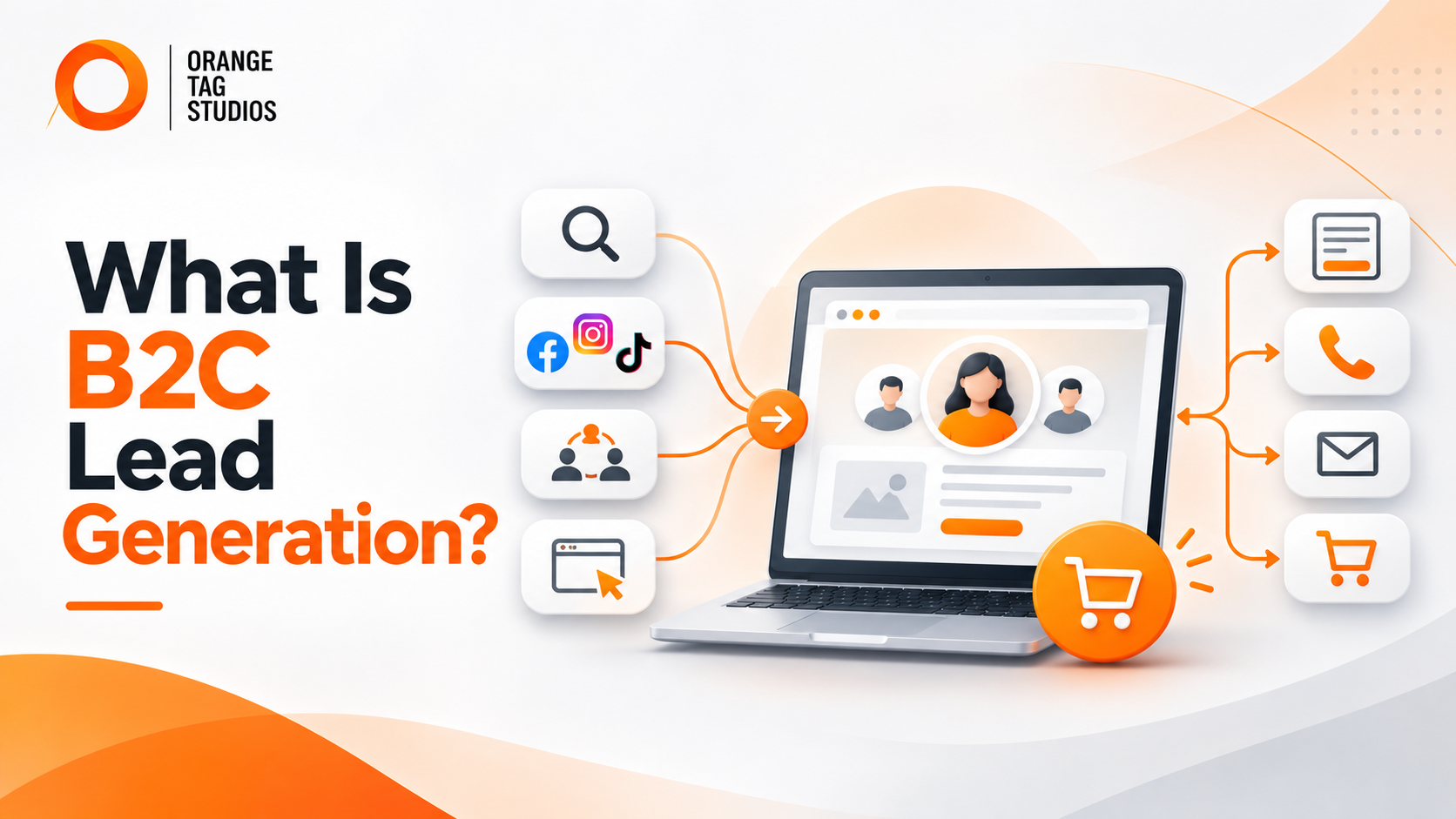
Business-to-consumer (B2C) lead generation is the process of identifying and attracting potential customers who may be interested in purchasing a product or service. Rather than waiting for customers to find your business, lead generation helps you connect with people who are already searching for what you offer.
In this article, we’ll break down how B2C lead generation works, which strategies are most effective, and how businesses can turn more opportunities into paying customers.
What Is B2C Lead Generation?
B2C lead generation is the process of attracting individual consumers who are interested in a business’s products or services and creating opportunities to turn those consumers into customers.
A lead might be someone who:
- Submits a contact form on your website.
- Calls your business to request an estimate.
- Sends a message asking about your services.
- Responds to a social media advertisement.
- Requests a recommendation for a local service provider.
- Signs up for a promotion, consultation, or appointment.
For example, imagine a homeowner in New Jersey who needs a new air conditioning system. They might search Google for HVAC companies, ask neighbors for recommendations, or post in a local Facebook group looking for an experienced contractor.
Each of these interactions creates an opportunity for an HVAC company to connect with a potential customer.
The goal of B2C lead generation is to recognize those opportunities and make it easy for interested consumers to take the next step.
How Does B2C Lead Generation Work?
Although lead generation strategies vary between industries, the overall process generally follows four stages.
1. Attract Potential Customers
The first step is getting your business in front of consumers who may need your services.
This can happen through search engines, social media, advertising, referrals, or local community recommendations.
For example, a roofing contractor might attract potential customers through Google searches for roof repairs or through recommendations in a neighborhood Facebook group.
2. Generate Interest
Once a potential customer discovers your business, they need a reason to consider contacting you.
Online reviews, examples of completed work, informative website content, and recommendations from trusted sources can all help build interest.
At this stage, consumers are often comparing multiple businesses before making a decision.
3. Capture the Lead
The next step is turning that interest into an actual business opportunity.
Common ways to capture leads include phone calls, website inquiries, appointment requests, and direct messages.
However, not every opportunity starts with a customer contacting your business directly. Sometimes, a potential customer publicly asks for a recommendation, creating an opportunity for someone to introduce your business.
4. Convert the Lead Into a Customer
Generating leads is only part of the process. Businesses also need to respond promptly, establish trust, and provide a compelling reason for customers to choose them.
A lead becomes a customer when someone purchases a product, books a service, or signs an agreement.
B2C vs. B2B Lead Generation: What’s the Difference?
While both approaches aim to generate new business, B2C and B2B lead generation target different audiences.
| B2C Lead Generation | B2B Lead Generation |
|---|---|
| Targets individual consumers | Targets businesses |
| Often involves shorter buying decisions | Often involves longer sales processes |
| Commonly driven by personal needs | Commonly driven by business objectives |
| Frequently uses reviews, recommendations, and local searches | Frequently uses professional networking, outreach, and industry relationships |
| Examples include plumbing, landscaping, and home remodeling | Examples include business consulting, wholesale distribution, and enterprise software |
For B2C businesses, convenience, timing, trust, and reputation can heavily influence purchasing decisions.
A homeowner dealing with a burst pipe, for example, may need a plumber immediately. That customer is much more likely to contact a business that is easy to find, highly recommended, and quick to respond.
6 Effective B2C Lead Generation Strategies
There are several ways businesses can consistently attract new customers. The most effective approach often combines multiple strategies.
1. Search Engine Optimization (SEO)
Search engine optimization helps businesses appear in search results when consumers look for their products or services.
For local businesses, this often means targeting searches such as:
- Plumber near me
- HVAC repair in Burlington County
- Residential electrician in New Jersey
- Local landscaping companies
- Bathroom remodeling contractors
A properly optimized website can generate leads from customers actively looking for a solution.
Unlike paid advertising, organic search traffic does not require paying for each website visit, although maintaining effective SEO requires ongoing investment.
2. Google Ads and Paid Advertising
Paid advertising allows businesses to appear in front of consumers searching for specific services or demonstrating relevant interests.
Google Ads can be particularly effective when targeting customers with immediate purchasing intent.
For example, someone searching for “emergency AC repair near me” may be much closer to hiring a contractor than someone casually researching HVAC systems.
Paid advertising can generate leads quickly, but businesses need to monitor acquisition costs and conversions to ensure their campaigns remain profitable.
3. Social Media Marketing
Platforms such as Facebook and Instagram help businesses reach consumers, showcase their work, and build local recognition.
Businesses can publish project photos, customer testimonials, promotions, and educational content to encourage engagement.
However, one of the biggest opportunities on social media goes beyond simply posting content.
Consumers frequently use local Facebook groups to ask for recommendations.
Someone might post:
“Does anyone know a reliable electrician in Burlington County?”
For an electrician serving that area, this represents an opportunity to connect with someone actively looking for their services.
Unlike traditional advertising, which often targets people who may eventually need a service, recommendation requests can reveal an immediate need.
4. Customer Referrals and Word-of-Mouth Marketing
Referrals are among the most valuable sources of B2C leads because they come with an existing level of trust.
Consumers often feel more comfortable contacting a business recommended by a friend, neighbor, or another professional.
Businesses can encourage referrals by providing excellent service, maintaining relationships with past customers, and building connections with other local business owners.
For example, a real estate agent might recommend a home inspector, electrician, or painting contractor to a client preparing to purchase a home.
These professional relationships can create a consistent source of qualified opportunities.
5. Online Reviews and Local Listings
Online reputation plays an important role in converting potential customers.
Consumers often compare Google Business Profiles, ratings, reviews, and business information before reaching out.
Keeping your business listings accurate and encouraging genuine customer reviews can improve visibility and help prospective customers feel confident in their decisions.
A business with a strong local reputation may convert more inquiries than a competitor with limited reviews or outdated information.
6. Local Networking and Community Engagement
Networking isn’t limited to B2B companies.
Local service providers can generate B2C opportunities by building relationships with other businesses that serve similar customers.
For example, a painter, flooring installer, and remodeling contractor may all encounter homeowners who need each other’s services.
By developing trusted professional relationships, these businesses can help connect consumers with appropriate service providers.
Community networking is especially valuable when paired with online opportunities, where consumers frequently request recommendations.
Why Facebook Groups Are an Important Source of B2C Leads
Local Facebook groups have become places where consumers ask their communities for advice and service recommendations.
Instead of immediately searching Google, a homeowner may ask neighbors who they trust for a particular job.
These conversations can be valuable because they often reveal three important things:
- A specific need: The consumer has identified a product or service they are looking for.
- A geographic location: The person is often searching within a particular town, county, or neighborhood.
- Buying intent: The consumer may be actively considering hiring someone rather than browsing general information.
For local businesses, finding and responding to these opportunities can be an effective addition to traditional lead generation.
The challenge is that monitoring multiple Facebook groups, identifying relevant requests, and responding consistently can become time-consuming.
This is why businesses benefit from having an organized process for finding opportunities, connecting consumers with service providers, and tracking potential business.
How Much Does B2C Lead Generation Cost?
The cost of B2C lead generation depends on the industry, competition, geographic market, and marketing strategy.
Some channels require direct advertising budgets, while others primarily require time, relationships, and ongoing marketing efforts.
When evaluating lead generation costs, businesses should focus on two important metrics.
Cost Per Lead (CPL)
Cost per lead measures how much a business spends to generate an individual inquiry or lead.
Customer Acquisition Cost (CAC)
Customer acquisition cost measures how much a business spends to acquire an actual paying customer.
For example, a business could generate inexpensive leads through advertising but struggle to convert them into customers. Another strategy might produce fewer leads at a higher cost, but those leads may convert more consistently.
Ultimately, the quality of leads and the revenue they generate matter more than lead volume alone.
How to Improve B2C Lead Generation Results
Generating more leads doesn’t always require spending more money.
Businesses can often improve their results by making better use of the opportunities they already have.
Some of the most effective improvements include:
- Responding quickly: Customers may contact several businesses, so timely responses can help secure opportunities.
- Building credibility: Reviews, testimonials, and examples of completed projects help establish trust.
- Tracking lead sources: Knowing where customers come from helps identify which marketing channels produce actual revenue.
- Maintaining relationships: Past customers and professional contacts can become valuable sources of future business.
- Focusing on qualified leads: Prioritizing consumers who need your services within your operating area can reduce wasted effort.
A consistent system for identifying, following up with, and tracking leads can make a significant difference in overall performance.
Is B2C Lead Generation Worth It for Small Businesses?
For small businesses, lead generation is often essential to sustainable growth.
Relying entirely on existing customers or occasional referrals can make revenue unpredictable. A structured lead generation strategy creates additional opportunities to reach consumers when they need a product or service.
The key is finding a strategy that fits your business.
A local plumbing company may benefit most from Google searches and neighborhood recommendations, while a retail business might generate more sales through social media advertising and email marketing.
Many businesses achieve better results by combining search visibility, local networking, social media engagement, and referrals rather than depending on a single source.
Final Thoughts: Building a Better B2C Lead Generation Strategy
B2C lead generation is about more than collecting phone numbers and email addresses. It’s about connecting your business with consumers who have a genuine need for what you offer.
Whether those opportunities come from Google, paid advertising, social media, or community referrals, businesses need a consistent way to find prospects and turn interest into paying customers.
For local service providers, some of the most valuable opportunities are already happening in everyday conversations, especially when consumers ask their communities for recommendations.
The businesses that consistently identify these opportunities, build trust, and respond effectively are better positioned to turn consumer demand into long-term growth.